AI-Assisted Truthfulness Assessment: Flagging What Needs a Closer Look
Manual, time-intensive review of written statements to gauge credibility, solved with an AI-powered text analysis feature that generates an automated truthfulness assessment.
We built an AI-powered statement analysis feature that gives reviewers a fast, consistent first pass before they ever start reading line by line.
The Challenge
When statements, whether typed, pasted, or uploaded as documents, need to be reviewed for credibility, that review has traditionally been a manual, judgment-heavy task. A reviewer has to read through the wording carefully, look for inconsistencies, hedging language, or patterns that might indicate embellishment or deception, and form an initial impression before deciding whether something warrants deeper investigation.
Done manually, this doesn't scale well. Every statement needs a close read, and the quality of that first pass depends heavily on the reviewer's experience and available time, with no consistent, repeatable starting point across cases.
The Solution
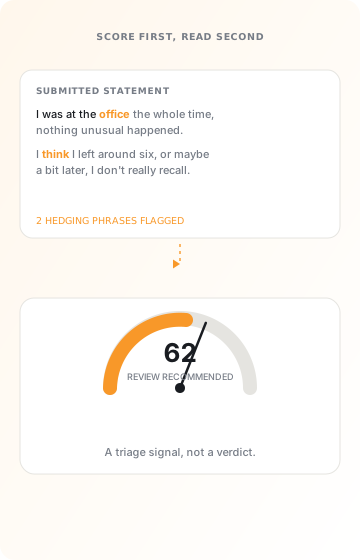
The score serves as a triage signal, not a final verdict, it highlights which statements are more likely to need closer scrutiny, so reviewer attention goes where it matters most.
Flexible Input
Users can paste text directly or upload a file containing the statement(s) to be analyzed, no rigid format requirements.
PASTE · UPLOADAI-Driven Analysis
The system analyzes the wording, context, and underlying patterns in the content, drawing on cues like language structure, specificity, and consistency.
NLP · PATTERN ANALYSISTruthfulness Scoring
The AI generates a truthfulness assessment or score for the statement, giving reviewers an immediate, structured starting point instead of a blank page.
SCORING · STRUCTURED OUTPUTTechnical Approach
AI analysis engine
Scoring output
Input handling
Workflow role
Results
- Initial statement review: from a fully manual read-through to an automated first-pass assessment. Reduced manual review workload by giving reviewers an automated starting assessment instead of a cold read.
- Consistency of initial review: from varying by reviewer and time available to a consistent, repeatable scoring baseline. More consistent first-pass review, independent of individual reviewer time or experience.
- Prioritization of follow-up: from determined case-by-case, manually, to guided by AI-flagged risk signals. Faster triage, statements more likely to need investigation surface earlier in the process.
- Input flexibility: from N/A to accepting both pasted text and uploaded files. Flexible intake, supporting both quick pasted text and full uploaded documents in the same workflow.